
Tell your friends about this item:
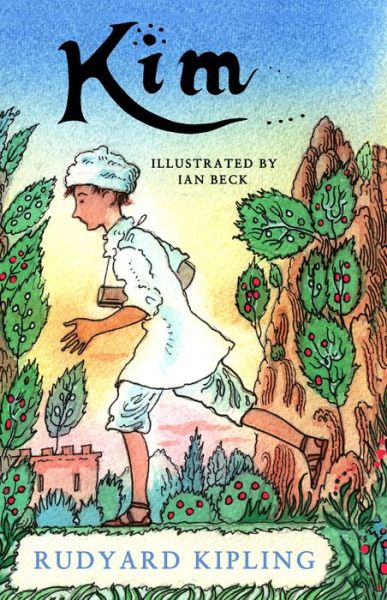
Kim Rudyard Kipling
Ordered from remote warehouse
Our customers say:


Also available as:
- Paperback Book (2010) R 175
- Paperback Book (2011) R 197
- Paperback Book (2015) R 247
- Paperback Book (2017) R 261
- Hardcover Book (2025) R 275
- Paperback Book (2018) R 279
- Paperback Book (2016) R 287
- Paperback Book (2018) R 289
- Paperback Book (2017) R 289
- Paperback Book (2017) R 289
- Paperback Book (2015) R 289
- Paperback Book (2018) R 295
- Paperback Book (2016) R 303
- Paperback Book (2016) R 307
-
Hardcover BookReissue edition(1995) R 307
- Paperback Book (2016) R 321
-
Paperback BookGerman edition(2012) R 321
- Paperback Book (2017) R 322
- Paperback Book (2017) R 328
- Paperback Book (2021) R 328
- Paperback Book (2018) R 328
- Paperback Book (2017) R 330
- Paperback Book (2018) R 330
- Paperback Book (2017) R 332
- Paperback Book (2015) R 332
Kim
Rudyard Kipling
Publisher Marketing: He sat, in defiance of municipal orders, astride the gun Zam Zammah on her brick platform opposite the old Ajaib-Gher-the Wonder House, as the natives call the Lahore Museum. Who hold Zam-Zammah, that 'fire-breathing dragon', hold the Punjab, for the great green-bronze piece is always first of the conqueror's loot. There was some justification for Kim-he had kicked Lala Dinanath's boy off the trunnions-since the English held the Punjab and Kim was English. Though he was burned black as any native; though he spoke the vernacular by preference, and his mother-tongue in a clipped uncertain sing-song; though he consorted on terms of perfect equality with the small boys of the bazar; Kim was white-a poor white of the very poorest. The half-caste woman who looked after him (she smoked opium, and pretended to keep a second-hand furniture shop by the square where the cheap cabs wait) told the missionaries that she was Kim's mother's sister; but his mother had been nursemaid in a Colonel's family and had married Kimball O'Hara, a young colour-sergeant of the Mavericks, an Irish regiment. He afterwards took a post on the Sind, Punjab, and Delhi Railway, and his Regiment went home without him. The wife died of cholera in Ferozepore, and O'Hara fell to drink and loafing up and down the line with the keen-eyed three-year-old baby. Societies and chaplains, anxious for the child, tried to catch him, but O'Hara drifted away, till he came across the woman who took opium and learned the taste from her, and died as poor whites die in India. His estate at death consisted of three papers-one he called his 'ne varietur' because those words were written below his signature thereon, and another his 'clearance-certificate'. The third was Kim's birth-certificate. [...] Review Citations: Newsweek 07/13/2009 pg. 48 (EAN 9780140183528, Paperback) Newsweek 08/09/2010 pg. 55 (EAN 9780140183528, Paperback) Ingram Paperback Advance 07/01/1999 pg. 16 (EAN 9780812565751, Mass Market Paperbound) Contributor Bio: Kipling, Rudyard Joseph Rudyard Kipling was born December 30, 1865, in Bombay, India. The name Rudyard was taken from a lake in Staffordshire, England. At the age of six, he and his younger sister were sent back to England where they lived with separate families that took in children for hire. He returned to India at age sixteen. Rudyard knew literary success at a young age and was able to travel. He married Carrie Balestier, an American, and moved to the United States. The Jungle Books were written in Vermont. He died January 18, 1936, in Middlesex, England during an operation.
| Media | Books Paperback Book (Book with soft cover and glued back) |
| Released | June 29, 2013 |
| ISBN13 | 9781490555867 |
| Publishers | Createspace |
| Genre | Cultural Region > British Isles |
| Pages | 354 |
| Dimensions | 189 × 246 × 19 mm · 630 g |



![Cover for Rudyard Kipling · Kim (Everyman's Library) (Hardcover Book) [Reissue edition] (1995)](https://imusic.b-cdn.net/images/item/original/605/9780679443605.jpg?rudyard-kipling-1995-kim-everyman-s-library-hardcover-book&class=scaled&v=1409645478)
![Cover for Rudyard Kipling · Kim - Modern Library 100 Best Novels (Paperback Book) [New edition] (2004)](https://imusic.b-cdn.net/images/item/original/347/9780812971347.jpg?rudyard-kipling-2004-kim-modern-library-100-best-novels-paperback-book&class=scaled&v=1464261437)








![Cover for Rudyard Kipling · Kim - Wordsworth Classics (Paperback Book) [New edition] (1994)](https://imusic.b-cdn.net/images/item/original/995/9781853260995.jpg?rudyard-kipling-1994-kim-wordsworth-classics-paperback-book&class=scaled&v=1393314716)




![Cover for Rudyard Kipling · Kim (Tredition Classics) (German Edition) (Paperback Book) [German edition] (2012)](https://imusic.b-cdn.net/images/item/original/907/9783847237907.jpg?rudyard-kipling-2012-kim-tredition-classics-german-edition-paperback-book&class=scaled&v=1508049045)